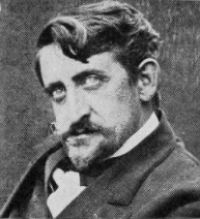
Thomas Gaffney Taaffe

Biographical details

Portrait of Thomas Gaffney Taaffe Thomas Gaffney Taaffe Catholic Encyclopedia (1913)

For fifteen years Alfred's kingdom was at peace, but in 903 the Danes who had been driven out made another onslaught. This war lasted for four years and resulted in the final establishment of Saxon supremacy. These struggles had another result, hardly less important than the freedom from Danish oppression. The successive invasions had crushed out of existence most of the individual kingdoms. Alfred made Wessex a rallying point for all the Saxons and by freeing the country of the invaders unwittingly unified England and prepared the way for the eventual supremacy of his successors.
Source: Wikisource

Portrait of Thomas Gaffney Taaffe Thomas Gaffney Taaffe Catholic Encyclopedia (1913)

Not only did he codify and promulgate laws, but he looked, too, to their enforcement, and insisted that justice should be dispensed without fear or favour. He devoted his energies to restoring what had been destroyed by the long wars with the invaders. Monasteries were rebuilt and founded, and learned men brought from other lands.
Source: Wikisource

Portrait of Thomas Gaffney Taaffe Thomas Gaffney Taaffe Catholic Encyclopedia (1913)

The West-Saxons and the Mercians were then engaged in a war against the invading Danes and Alfred took an active part in the struggle. He ascended the throne during the thickest of this conflict, but before the end of the year he succeeded in effecting a peace, probably by paying a sum of money to the invaders. Wessex enjoyed a measure of peace for a few years, but about 875 the Danes renewed their attacks. They were repulsed then, and again in 876 and 877, on each occasion making solemn pledges of peace.
Source: Wikisource

Get perspective with Kwize: daily news enlightened by great literature