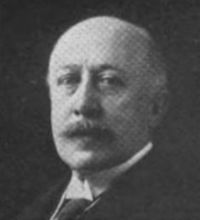
Thomas Henry Poole

Biographical details

Portrait of Thomas Henry Poole Thomas Henry Poole,  Catholic Encyclopedia (1913)

“ The Holy of Holies, or Sanctum Sanctorum, of the temple of Solomon was of the nature of the pagan adytum; none but the high priest being admitted into it, and he but once a year. Among the Egyptians the secos was the same thing, and is described by Strabo. A well-preserved adytum that has come to our knowledge is in the little temple in Pompeii; it is raised some steps above the level of the temple itself, and is without light. In Christian architecture it sometimes signifies the chancel, or altar end of a church. ”
Source: Wikisource

Portrait of Thomas Henry Poole Thomas Henry Poole,  Catholic Encyclopedia (1913)

“ Amadeo (or Omodeo) , Giovanni Antonio, an Italian architect and sculptor, born near Pavia in 1447; died 27 August, 1522, at Milan. In 1466 he was engaged as a sculptor, with his brother Protasio, at the famous Certosa, near Pavia. He was a follower of the style of Bramantino of Milan, and he represents, like him, the Lombard direction of the Renaissance. He practised cutting deeply into marble, arranging draperies in cartaceous folds, and treating surfaces flatly even when he sculptured figures in high relief. ”
Source: Wikisource

Portrait of Thomas Henry Poole Thomas Henry Poole,  Catholic Encyclopedia (1913)

“ Sometimes a church has one side-aisle only. Often the aisle is continued around the apse. Occasionally the aisles stop at the transepts. In very large churches transepts may have three aisles. As a rule in Gothic architecture the aisle-roofs are much lower than the nave roof, allowing the admission of light through the clerestory windows, but in most of the Romanesque churches the aisle-roofs are but little lower than that of the nave. The aisle is generally one story, but occasionally there is an upper story, sometimes used as a gallery. ”
Source: Wikisource

Get perspective with Kwize: daily news enlightened by great literature