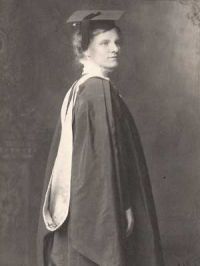
William Edward Collins

William Edward Collins The Cambridge Modern History, Volume 2… (1904)

Thus ended the Reform in Spain, as it had ended in Italy, uprooted by the intolerant dogmatism which assumed that there was an ascertained answer to every possible theological question, confused right-thinking with accuracy of knowledge, and discerned heresy in every reaction and every independent effort of the human mind. Many of those who had been driven out of Spain continued to work elsewhere. Such were Juan Perez already referred to, Cassiodoro de Reina, and Cipriano Valera, each of whom translated the whole Bible into Spanish, and many more.
Source: Wikisource

William Edward Collins 1911 Encyclopædia Britannica, Volume 9… (1911)

It denotes any special connexion with the state, or privileges and responsibilities before the law, possessed by one religious society to the exclusion of others; in a word, establishment is of the nature of a monopoly. But it does not imply merely privilege. The state and the Church have mutual obligations towards one another: each is, to some extent, tied by the existence of this relationship, and each accepts the limitations for the sake of the advantages which accrue to itself.
Source: Wikisource

William Edward Collins The Cambridge Modern History, Volume 2… (1904)

We now return to trace the fortunes of SWEDEN, where, as we have seen, the massacre of Stockholm had decided the fate of the Danish rule. But if the Swedish War of Independence was already inevitable, in its actual course it was the work of one man, the young Gustaf Eriksson, known to later ages as Gustavus Vasa from the fascine or sheaf (vasa) which was the badge of the family. Born in 1496 at Lindholm, he had studied from 1509 to 1514 at Upsala, after which he entered the service of the younger Sten Sture and fought under him against the Danes.
Source: Wikisource

Get perspective with Kwize: daily news enlightened by great literature