“ But for you, there would never have been any––to-morrow.”“That’s true!” The young man’s arm encircled the girl’s slender waist as they stood together in the glowing sunlight, but his other hand gripped the detective’s. “We owe life, our happiness, the future, everything to you!”And so Henry Blaine left them.At the door he turned and glanced back, and the sight his eyes beheld was a goodly one for him to carry away with him into the world––a sight as old as the ages, as new as the hour, as prescient as the hours and ages to come. Just a man and a maid, sunshine and happiness, youth and love! ”
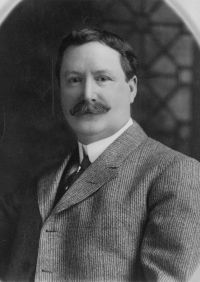
William J. Burns
Biographical details

William John Burns (1861–1932), dubbed “America’s Sherlock Holmes,” was a pioneering private investigator and law enforcement figure renowned for high-profile cases such as exonerating Leo Frank in the 1913 murder trial and solving the 1910 Los Angeles Times bombing. As director of the Bureau of Investigation (BOI), predecessor to the FBI, he navigated political scandals and modernized the agency, though his tenure was marred by controversies like the Teapot Dome affair.
A prolific writer, Burns authored detective novels such as The Crevice, blending his real-world exploits with narratives exploring justice, deception, and the ethical dilemmas of his profession. His legacy intertwines the rigor of investigative work with the enduring appeal of crime-solving fiction.
Quotes by William J. Burns
“ Anita sighed and sank back resignedly in her chair. There was a moment’s pause before she added:“It is hard to be quiescent when one is so hedged in on all sides by falsehood and deceit and the very air breathes conspiracy and intrigue. I have no tangible reason to fear for my own life, of course, but sometimes I cannot help wondering why it has not been imperiled. Surely it would be easier for my father’s enemies to do away with me altogether than to have conceived and carried out such an elaborate scheme to rob me and defame my father’s memory. ”
“ Mallowe stormed. “Young woman, you forget yourself! Because of the evil suggestions, the malevolent influence of this man’s plausible lies, are you such an ingrate as to turn upon your only friends, your father’s intimate, life-long associates, the people who have, from disinterested motives of the purest kindness and affection, provided for you, comforted you, and shielded you from the world? Anita, I cannot believe it of you! I will leave you, now. I am positively overcome with this added shock of your ingratitude and willful deceit, coming so soon after the blow of my poor friend’s death. ”
