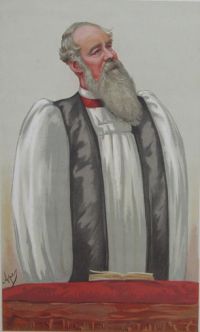
William Lindsay Alexander and Alexander James Grieve

Biographical details

William Lindsay Alexander and Alexander James Grieve 1911 Encyclopædia Britannica (1911)

Even the churches which trace their descent from Calvin’s work and faith no longer hold in their entirety his views on the magistrate as the preserver of church purity, the utter depravity of human nature, the non-human character of the Bible, the dealing of God with man. But his system had an immense value in the history of Christian thought. It appealed to and evoked a high order of intelligence, and its insistence on personal individual salvation has borne worthy fruit.
Source: Wikisource

William Lindsay Alexander and Alexander James Grieve 1911 Encyclopædia Britannica (1911)

Through faith, which is a firm and certain cognition of the divine benevolence towards us founded on the truth of the gracious promise in Christ, men are by the operation of the Spirit united to Christ and are made partakers of His death and resurrection, so that the old man is crucified with Him and they are raised to a new life, a life of righteousness and holiness.
Source: Wikisource

William Lindsay Alexander and Alexander James Grieve 1911 Encyclopædia Britannica (1911)

Though Calvin built his theology on the foundations laid by earlier reformers, and especially by Luther and Bucer, his peculiar gifts of learning, of logic and of style made him pre-eminently the theologian of the new religion. The following may be regarded as his characteristic tenets, though not all are peculiar to him.
The dominant thought is the infinite and transcendent sovereignty of God, to know whom is the supreme end of human endeavour. God is made known to man especially by the Scriptures, whose writers were “sure and authentic amanuenses of the Holy Spirit.”
Source: Wikisource

Get perspective with Kwize: daily news enlightened by great literature