Summary

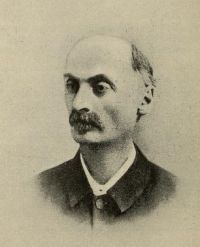
Portrait of A. H. Sayce A. H. Sayce Littell's Living Age — Volume 146… (1880)

Mallery observes that "further evidence of the unconscious survival of gesture-language is afforded by the ready and involuntary response made in signs to signs when a man with the speech and habits of civilization is brought into close contact with Indians or deaf-mutes. Without having ever seen or made one of their signs, he will soon not only catch the meaning of theirs, but produce his own, which they will likewise comprehend, the power seemingly remaining latent in him until called forth by necessity.
Source: Wikisource

Portrait of A. H. Sayce A. H. Sayce Littell's Living Age — Volume 146… (1880)

North America has always been the country where a language of signs was pre-eminently in vogue. Col. Mallery says with justice that "the words of an Indian tongue, being synthetic or undifferentiated parts of speech, are in this respect strictly analogous to the gesture elements which enter into a sign-language." Just as a single idea or mental picture is represented by a connected group of individual gestures, so to it is expressed in the polysynthetic speech of the Red Indian by a group of individual syllables which form but one word.
Source: Wikisource

Get perspective with Kwize: daily news enlightened by great literature