Summary

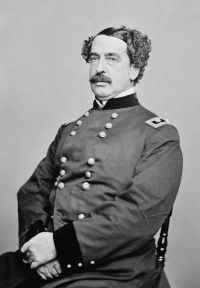
Portrait of Abner Doubleday Abner Doubleday Chancellorsville and Gettysburg

Hooker was very much discouraged by the rout of the Eleventh Corps. An occurrence of this kind always has a tendency to demoralize an army and render it less trustworthy; for the real strength of an armed force is much more in opinion than it is in numbers. A small body of men, if made to believe the enemy are giving way, will do and dare anything; but when they think the struggle is hopeless, they will not resist even a weak attack, for each thinks he is to be sacrificed to save the rest. Hence Hooker did not feel the same reliance on his men as he did before the disaster.
Source: Gutenberg

Portrait of Abner Doubleday Abner Doubleday Chancellorsville and Gettysburg

Death had been busy on all sides, and few indeed now remained of that magnificent column which had advanced so proudly, led by the Ney of the rebel army, and those few fell back in disorder, and without organization, behind Wright's brigade, which had been sent forward to cover the retreat. At first, however, when struck by Stannard on the flank, and when Pickett's charge was spent, they rallied in a little slashing, where a grove had been cut down by our troops to leave an opening for our artillery.
Source: Gutenberg

Portrait of Abner Doubleday Abner Doubleday Chancellorsville and Gettysburg

It is full time justice should be done by calling attention to the position of that corps. I assert that when a force is not deployed, but is struck suddenly and violently on its flank, resistance in impracticable. Not Napoleon's Old Guard, not the best and bravest troops that ever existed, could hold together in such a case, for the first men assailed are—to use a homely but expressive word— driven into a huddle; and a huddle cannot fight, for it has no front and no organization.
Source: Gutenberg

Get perspective with Kwize: daily news enlightened by great literature