Summary

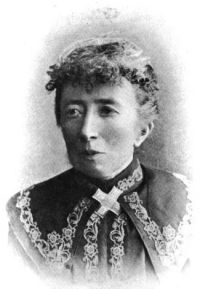
Portrait of Agnes Mary Clerke Agnes Mary Clerke 1911 Encyclopædia Britannica, Volume 17… (1911)

His widow, by whom they were sent to England, received in consideration from the British government a grant of £3000. Appended to the London edition of the solar and lunar tables are two short tracts—the one on determining longitude by lunar distances, together with a description of the repeating circle (invented by Mayer in 1752) , the other on a formula for atmospheric refraction, which applies a remarkably accurate correction for temperature.
Source: Wikisource

Portrait of Agnes Mary Clerke Agnes Mary Clerke 1911 Encyclopædia Britannica, Volume 17… (1911)

In 1755 he submitted to the English government an amended body of MS. tables, which James Bradley compared with the Greenwich observations, and found to be sufficiently accurate to determine the moon’s place to 75′′, and consequently the longitude at sea to about half a degree. An improved set was afterwards published in London (1770) , as also the theory (Theoria lunae juxta systema Newtonianum, 1767) upon which the tables are based.
Source: Wikisource

Portrait of Agnes Mary Clerke Agnes Mary Clerke 1911 Encyclopædia Britannica, Volume 17… (1911)

The manuscript residue includes papers on atmospheric refraction (dated 1755) , on the motion of Mars as affected by the perturbations of Jupiter and the Earth (1756) , and on terrestrial magnetism (1760 and 1762) . In these last Mayer sought to explain the magnetic action of the earth by a modification of Euler’s hypothesis, and made the first really definite attempt to establish a mathematical theory of magnetic action (C. Hansteen, Magnetismus der Erde, i. 283) . E. Klinkerfuss published in 1881 photo-lithographic reproductions of Mayer’s local charts and general map of the moon
Source: Wikisource

Get perspective with Kwize: daily news enlightened by great literature