Summary

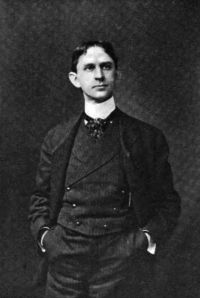
Portrait of Albert Bigelow Paine Albert Bigelow Paine The Boys' Life of Mark Twain — Chapter 59 (1916)

To Charles Harvey Genung, who sat next to me, I whispered something of this, and how during the thirty-six years since then no one had meant to me quite what Mark Twain had meant—in literature and, indeed, in life. Now here he was just across the table. It was a fairy-tale come true.
Genung said: "You should write his life."
It seemed to me no more than a pleasant remark, but he came back to it again and again, trying to encourage me with the word that Munro had brought back concerning the biography of Nast. However, nothing of what he said had kindled any spark of hope.
Source: Wikisource

Portrait of Albert Bigelow Paine Albert Bigelow Paine The Boys' Life of Mark Twain — Chapter 59 (1916)

I saw the interior of a farm-house sitting-room in the Middle West where I had first heard the name of Mark Twain, and where night after night a group had gathered around the evening lamp to hear read aloud the story of the Innocents on their Holy Land pilgrimage, which to a boy of eight had seemed only a wonderful poem and fairy-tale.
Source: Wikisource

Portrait of Albert Bigelow Paine Albert Bigelow Paine The Boys' Life of Mark Twain — Chapter 59 (1916)

He had been chosen, he said, to propose the Players' dinner to Mark Twain, and had found him propped up in bed, and beside him a copy of the Nast book. I suspect now that David's generous heart prompted Mark Twain to speak of the book, and that his comment had lost nothing in David's eager retelling. But I was too proud and happy to question any feature of the precious compliment, and Munro—always most happy in making others happy—found opportunity to repeat it, and even to improve upon it—usually in the presence of others—several times during the evening.
Source: Wikisource

Get perspective with Kwize: daily news enlightened by great literature