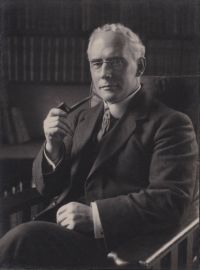
Albert Frederick Pollard

Albert Frederick Pollard

Summary

Portrait of Albert Frederick Pollard Albert Frederick Pollard 1911 Encyclopædia Britannica, Volume 28… (1911)

Walsingham threw himself heart and soul into the movement. He was the anxious fanatic of Elizabeth’s advisers; he lacked the patience of Burghley and the cynical coolness of Elizabeth. His devotion to Protestantism made him feverishly alive to the perils which threatened the Reformation; and he took an alarmist view of every situation. Ever dreading a blow, he was always eager to strike the first, and alive to the perils of peace, he was blind to the dangers of war. He supplied the momentum which was necessary to counteract the caution of Burghley and Elizabeth
Source: Wikisource

Portrait of Albert Frederick Pollard Albert Frederick Pollard 1911 Encyclopædia Britannica, Volume 28… (1911)

War, declared before England had gained the naval experience and wealth of the next fifteen years, and before Spain had been weakened by the struggle in the Netherlands and the depredations of the sea-rovers, would have been a desperate expedient; and the ideas that any action on Elizabeth’s part could have made France Huguenot, or prevented the disruption of the Netherlands, may be dismissed as the idle dreams of Protestant enthusiasts.
Source: Wikisource

Portrait of Albert Frederick Pollard Albert Frederick Pollard 1911 Encyclopædia Britannica, Volume 28… (1911)

In his professional capacity, his attitude was correct enough; and, indeed, his anxiety for the French alliance and for the marriage between Elizabeth and Anjou led him to suggest concessions to Anjou’s Catholic susceptibilities which came strangely from so staunch a Puritan. Elizabeth did not mean to marry, and although a defensive alliance was concluded between England and France in April 1572, the French government perceived that public opinion in France would not tolerate an open breach with Spain in Protestant interests.
Source: Wikisource

Get perspective with Kwize: daily news enlightened by great literature