Summary

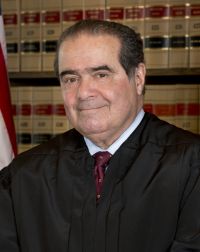
Portrait of Antonin Scalia Antonin Scalia FW/PBS, Inc. v. Dallas — Concurring Opinion

It is necessary, to be sure of protecting valuable speech, that we compel all communities to tolerate individual works that have only marginal communicative content beyond raw sexual appeal; it is not necessary that we compel them to tolerate businesses that hold themselves forth as specializing in such material. Because I think that Dallas could constitutionally have proscribed the commercial activities that it chose instead to license, I do not think the details of its licensing scheme had to comply with First Amendment standards.
Source: Wikisource

Portrait of Antonin Scalia Antonin Scalia FW/PBS, Inc. v. Dallas — Concurring Opinion

Surely it would be permissible to interpret the phrase "as one of its principal business purposes" in the definition of "adult bookstore or adult video store" to require such holding forth. A business can hardly have as a principal purpose a line of commerce it does not even promote. Likewise, the portion of the definitions of "adult cabaret" and "adult theater" which requires that they regularly "feature" the described sexual material suggests that it must not merely be there but must be promoted or marketed as such.
Source: Wikisource

Portrait of Antonin Scalia Antonin Scalia FW/PBS, Inc. v. Dallas — Concurring Opinion

Although Ginzburg narrowly involved the question whether particular publications were obscene, the foundation for its holding is that "the sordid business of pandering," Ginzburg, supra, 383 U.S., at 467, 86 S.Ct., at 945, is constitutionally unprotected-that the sale of material "solely to produce sexual arousal . . . does not escape regulation because [the material] has been dressed up as speech, or in other contexts might be recognized as speech."
Source: Wikisource

Get perspective with Kwize: daily news enlightened by great literature