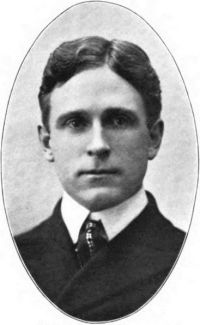
Archer Butler Hulbert

Archer Butler Hulbert

Summary

Portrait of Archer Butler Hulbert Archer Butler Hulbert,  Boone's Wilderness Road

“ And come what may, this zig-zag pathway through Powell’s Valley and Cumberland Gap can never be effaced—never forgotten. The footsteps of the tens of thousands who have passed over it, exhausted though each pilgrim may have been, have left a trace that a thousand years cannot eradicate. And so long as the print of those weary feet can be seen in dark Powell’s Valley, on Cumberland Gap, and beside Yellow and Rockcastle Creeks, so long will there be a memorial left to perpetuate the heroism of the first Kentuckians—and the memory of what the Middle West owes to Virginia and her neighbors. ”
Source: Gutenberg

Portrait of Archer Butler Hulbert Archer Butler Hulbert,  Boone's Wilderness Road (1902)

“ They remember, and always will remember, the burning words of Washington written more than ten years after the close of the Revolution: "All the difficulties we encounter with the Indians, their hostilities, the murder of helpless women and children along all our frontiers, results from the conduct of the agents of Great Britain in this country." There are today, in hundreds of homes of descendants of the pioneers in Kentucky, memories of the inhuman barbarities of British officers during the Revolution; these will never be forgotten, and will never fail to prejudice generations yet unborn. ”
Source: Wikisource

Portrait of Archer Butler Hulbert Archer Butler Hulbert,  Boone's Wilderness Road

“ Though the frontiers of New York, Pennsylvania, and Virginia suffered greatly during the Revolution, it was Kentucky that was the thorn in the side of the British; Kentucky drew the fire of both British and Indians which otherwise would have desolated the rear of the eastern colonies, and necessitated a greater number of men than could possibly have been maintained there. It was not at Fort Pitt that the British were constantly striking, but at the Kentucky “stations;” it was not up the Allegheny or Monongahela that Colonel Burd pushed his keel boats, but up the Licking. ”
Source: Gutenberg

Get perspective with Kwize: daily news enlightened by great literature