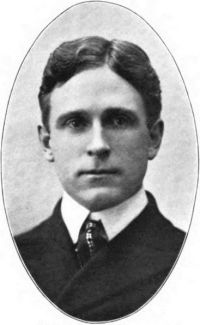
Archer Butler Hulbert

Archer Butler Hulbert

Summary

Portrait of Archer Butler Hulbert Archer Butler Hulbert Waterways of Westward Expansion (1902)

River life at once underwent a great change with the gradual supremacy of the steamboat in the carrying trade of the Ohio and its tributaries. The sounding whistle blew away from our valleys much that was picturesque—those strenuous days when a well developed muscle was the best capital with which to begin business. Of course the flat-boat did not pass from our waters, but as a type of old-time rivermen their lusty crews have disappeared.
Source: Wikisource

Portrait of Archer Butler Hulbert Archer Butler Hulbert Waterways of Westward Expansion (1902)

The early water life of the Ohio and its kindred streams was the very romance of emigration; no monotonous agriculture, no toilsome wood-chopping could keep back the adventurous boys who found delight in the endless novelty, the alternate energy and repose of a floating existence on those delightful waters. The variety of river craft corresponded to the varied temperaments of the boatmen. There was the great barge with lofty deck requiring twenty-five men to work it up-stream; there was the long keel-boat, carrying from twenty-five to thirty tons
Source: Wikisource

Portrait of Archer Butler Hulbert Archer Butler Hulbert Waterways of Westward Expansion (1902)

Browned by the sun and hardened by wind and rain and snow they were a strong race of men; they could paddle or walk the entire day with little fatigue. Yet their day's work was not such usually that it made mere brute machines of them. Not as boisterous as the French on the Great Lakes and their tributaries, these first Americans in the West were yet a buoyant crew; there were songs to be sung as the canoe glided speedily along beneath the shadows of those tremendous forest trees
Source: Wikisource

Get perspective with Kwize: daily news enlightened by great literature