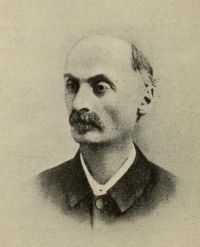
 Archibald Henry Sayce,
1911 Encyclopædia Britannica, Volume 26…
(1911)
Archibald Henry Sayce,
1911 Encyclopædia Britannica, Volume 26…
(1911)
“ South of these two mounds is the site of the royal Elamite city. The fourth mound, covering the remains of the poorer houses, is on the right bank of the river between the Shaur and the Kerkha. J. de Morgan’s excavations (since 1897) have been principally in the citadel mound, which measures roughly 1500 ft. by 825 ft. and is 125 ft. high. The two lowest strata belong to the stone age, and the first is characterized by a fine thin pottery, with yellow paste decorated with geometrical patterns and animal or vegetable figures in black and brown-red. ”
