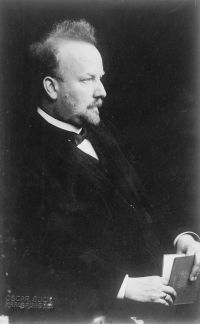
 Arthur Drews,
The Witnesses to the Historicity of Jesus…
(1912)
Arthur Drews,
The Witnesses to the Historicity of Jesus…
(1912)
“ If we look only at details, we imagine that Jesus has exhausted all the possibilities of ethics; if we regard the whole, we see that he skims the surface and thinks he can hold all things, because he can penetrate none. It is only children that can unite everything. Thus Jesus is not the highest and freest personality of history, but only the highest in ancient Judaism, restricted and not free in comparison with the greatest Greek thinkers. If, in spite of this, he had succeeded to their heritage with his ethic, he owes this to his reactionary character. ”
