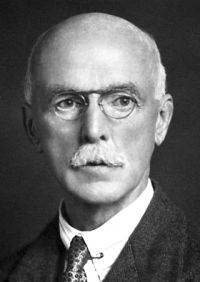
Arthur Harden

Arthur Harden

Summary

Portrait of Arthur Harden Arthur Harden Dictionary of National Biography (1901)

Newth's great work lay in the influence which he exerted as principal of New College on the minds of the divinity students who came under his care. Although his rule was strict, he gained their affection and esteem. He was a most accurate scholar in all of the many branches of learning which he cultivated, and was deeply versed in the history of the nonconformist colleges.
Source: Wikisource

Portrait of Arthur Harden Arthur Harden Dictionary of National Biography (1901)

In 1868 Playfair was returned to parliament in the liberal interest as member for the universities of Edinburgh and St. Andrews, which he continued to represent until 1885. On his election to the House of Commons he resigned his chair at Edinburgh (1869) and returned to London, where he henceforth resided. His influence in parliament was steadily exerted in favour of the improvement of both the education and the social and sanitary surroundings of the people. While he represented the universities, he in fact confined himself entirely to social and educational questions.
Source: Wikisource

Portrait of Arthur Harden Arthur Harden Dictionary of National Biography (1901)

Andrews was elected a fellow of the Royal Society on 7 June 1849, and an honorary fellow of the Royal Society of Edinburgh in 1870. The degree of doctor of laws was conferred upon him by the university of Edinburgh in 1871, by Trinity College, Dublin, in 1873, and by the university of Glasgow in 1877; while the degree of D.Sc. was conferred upon him in 1879 by the Queen’s University of Ireland. He was president of the chemistry section of the British Association at Belfast in 1852, and again at Edinburgh in 1871, and was president of the association at Glasgow in 1876.
Source: Wikisource

Get perspective with Kwize: daily news enlightened by great literature