Summary

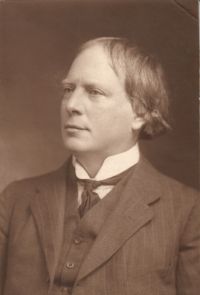
Portrait of Arthur Machen Arthur Machen The Secret Glory — IV.—i.

I have said that sometimes one must expel the angels that God may have room; and now the strict ordinance was given that I should sever myself from that great dream of Celtic sanctity that for me had always been the dream, the innermost shrine in which I could take refuge, the house of sovran medicaments where all the wounds of soul and body were healed. One does not wish to be harsh; we must admit, I suppose, that moderate, sensible Anglicanism must have something in it—since the absolute sham cannot very well continue to exist.
Source: Wikisource

Portrait of Arthur Machen Arthur Machen The Secret Glory — IV.—i.

But, as I say, I had a very dim and distant glimpse of another region of the askesis. Mystics will understand me when I say that there are moments when the Dark Night of the Soul is seen to be brighter than her brightest day; there are moments when it is necessary to drive away even the angels that there may be place for the Highest. One may ascend into regions so remote from the common concerns of life that it becomes difficult to procure the help of analogy, even in the terms and processes of the Arts.
Source: Wikisource

Portrait of Arthur Machen Arthur Machen The Secret Glory — IV.—i.

Next to this simple asceticism comes, I suppose, the ordinary discipline of the Church—the abandonment of sensible goods to secure spiritual ends, the turning away from the type to the prototype, from the sight of the eyes to the vision of the soul. For in the true asceticism, whatever its degree, there is always action to a certain end, to a perceived good. Does the self-tormenting fakir act from this motive? I don't know; but if he does not, his discipline is not asceticism at all, but folly, and impious folly, too. If he mortifies himself merely for the sake of mortifying himself
Source: Wikisource

Get perspective with Kwize: daily news enlightened by great literature