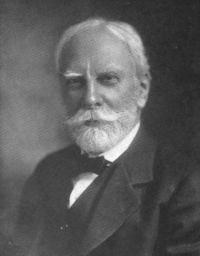
Arthur Searle

Arthur Searle

Summary

Portrait of Arthur Searle Arthur Searle Popular Science Monthly (1880)

In most cases, after the course of nature had thoroughly removed all that could decay, there could be no objection to the disinterment of the skeleton. Cremation would now be a comparatively cheap method of preserving the remains from any treatment which might be held to be indecorous, and the passage of time would ordinarily have removed all occasion for the natural feeling which makes us shrink from doing any violence to a recent corpse. The earth used for the interments might, of course, be thoroughly heated at long intervals, to destroy any accumulation in it of organic products
Source: Wikisource

Portrait of Arthur Searle Arthur Searle Popular Science Monthly (1880)

It is needless to engage in a discussion of the repulsive incidents which must or may attend either the use or the abandonment of coffins. We have had them unpleasantly set forth time and again, and may assume at once that all of them are, if possible, to be avoided. The ground ought not to be poisoned either more or less; and we have not room for so wide a separation of one corpse from another as to make our interments quite harmless.
Source: Wikisource

Portrait of Arthur Searle Arthur Searle Popular Science Monthly (1880)

TRAVELERS to Rome, endowed with a reasonable measure of that taste for the repulsive which is natural to our paradoxical race, have long been accustomed to include in their round of sights a Capuchin convent, noted only for the singular manner in which the bones of its deceased inmates have been made to serve as emblems of mortality to the devout.
Source: Wikisource

Get perspective with Kwize: daily news enlightened by great literature