Summary

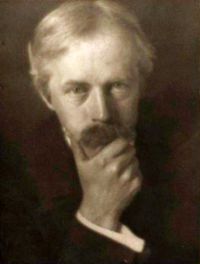
Portrait of Arthur Symons Arthur Symons 1911 Encyclopædia Britannica, Volume 28… (1911)

He hated mediocrity, science, progress, the present age, money and “serious” people. In one division of his work he attacked all the things which he hated with a savage irony; in another division of his work he discovered at least some glimpses of the ideal world. He remains a remarkable poet and a remarkable satirist, imperfect as both. He improvised out of an abundant genius, but the greater part of his work was no more than improvisation.
Source: Wikisource

Portrait of Arthur Symons Arthur Symons 1911 Encyclopædia Britannica, Volume 28… (1911)

But he has left, at all events, the Contes cruels, in which may be found every classic quality of the French conte, together with many of the qualities of Edgar Allan Poe and Ernst Hoffman, and the drama of Axël, in which the stage takes a new splendour and a new subtlety of meaning. Villiers’s influence on the younger French writers was considerable. It was always an exaltation. No one in his time followed a literary ideal more romantically.
Source: Wikisource

Get perspective with Kwize: daily news enlightened by great literature