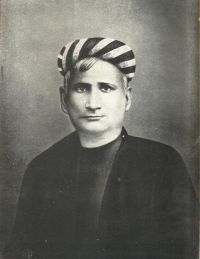
Bankim Chandra Chattopadhyay

Bankim Chandra Chattopadhyay

Summary

Portrait of Bankim Chandra Chattopadhyay Bankim Chandra Chattopadhyay On the Origin of Hindu Festivals (1869)

Originally, it was nothing but a festival in honour of spring, Vasantotsaba. From Vasantotsaba it degenerated into Madanotsaba, or the festival of love, and then the religious element first crept in. It is strange that that season of the year when the fresh bursting forth of nature into new life, and into forms of pure and stainless beauty, is calculated to dispose the mind towards the highest and the calmest moods, should be set down by the poets and the people of India as peculiarly the season of love and desire.
Source: Wikisource

Portrait of Bankim Chandra Chattopadhyay Bankim Chandra Chattopadhyay On the Origin of Hindu Festivals (1869)

Being so set down, spring came to be indissolubly associated with love and desire, not that love which is high, holy as an abnegation of self, even when man or his companion is the object, but love which levels man to the brute. The association was so strong, that whenever a Hindu poet happens to touch on spring, he speaks of it only in one aspect—as the season of love.
Source: Wikisource

Portrait of Bankim Chandra Chattopadhyay Bankim Chandra Chattopadhyay On the Origin of Hindu Festivals (1869)

He is tender, he is touching, his exquisite and trembling sensibility reflects every shade of the new life of Nature; but the leading idea throughout the description is still that of the season of love and desire. It was natural, therefore, that the festival of spring should transform itself into the festival of love; and as love was the god Madana, the festival became one for the worship of Madana.
Source: Wikisource

Get perspective with Kwize: daily news enlightened by great literature