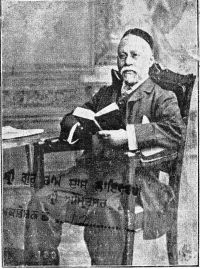
 Behramji Malabari,
Gujarát and the Gujarátis — The Unholy Holi
(1882)
Behramji Malabari,
Gujarát and the Gujarátis — The Unholy Holi
(1882)
“ Holi is not a holy institution wholly, but it is a jolly holiday nevertheless. It is the season of free love and free language, not only among the Vaishnavas, but the lower castes of Gujarát, the Saturnalia of indecent song, the high carnival of mad carousal. It is the season of rang and rág, which two innocent-looking monosyllables the High Court Translator may translate as "red paint and music," but which, in reality, mean the luxuries of love's embrace, the sporting of Káma [1] and Rati. [2] The origin of Holi has been a subject of ardent speculation by philosophers and theosophists. ”
