Summary

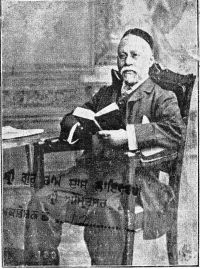
Portrait of Behramji Malabari Behramji Malabari Gujarát and the Gujarátis — The People… (1882)

There is a profound mystery always overhanging the personal affairs of the Máháráj. That mystery shrouds his birth, it shrouds his life, and I'll be bound that same mystery shrouds his death. We know that he was born in 1829, visibly of human parents; but some hundreds of thousands of his worshippers assert, on their solemn oaths, that Jivánlálji Máháráj existed ages before he was born, and that ages before that event did he carry on that amorous traffic with his fair devotees which is essential,in the Vaishnava creed, to the salvation and beatification of the degraded female soul.
Source: Wikisource

Portrait of Behramji Malabari Behramji Malabari Gujarát and the Gujarátis — The People… (1882)

As merchants and traders they are even now most successful;but the vakils, with few exceptions, are mere petty-foggers; the gentlemen at large are easy-going, well-preserved individuals, who live and die to themselves. The enterprise and honesty which once characterised mercantile dealings are unknown to men of the present day. Transactions involving enormous sums were once carried on in Gujarat verbally; and some of my readers may have heard of the Gujarát Sowcár who received a large advance of money on a hair of his moustache as a pledge!
Source: Wikisource

Portrait of Behramji Malabari Behramji Malabari Gujarát and the Gujarátis — The People… (1882)

The Vaishnavas of Western India went into mourning the other day, out of respect for the memory of Jivánlálji Máháráj, one of their "great lords." Jivánlálji Máháráj died of "some disease," and, so far, it is not satisfactory, I fear, for his numerous devotees to learn that their "great lord," the ever-youthful and immortal, should have succumbed like an ordinary mortal to mere physical ailment.
Source: Wikisource

Get perspective with Kwize: daily news enlightened by great literature