Summary

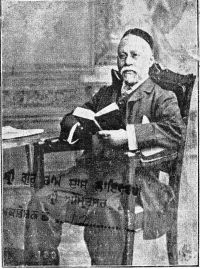
Portrait of Behramji Malabari Behramji Malabari Gujarát and the Gujarátis — Holidays (1882)

In these games the Hindu is joined heartily by the Parsi and the Mahomedan. Diwáli illuminations are enjoyed by all classes, young and old, rich and poor. The vast multitude of a hundred nationalities surging up the thoroughfares like the waves of the ocean, in all colours of the rainbow, each heart bent upon enjoying the present, and each face beaming with the enjoyment, must be a magnificent sight indeed.
Source: Wikisource

Portrait of Behramji Malabari Behramji Malabari Gujarát and the Gujarátis — Holidays (1882)

No one feature of the night is perhaps more attractive than the different head-gears. The Parsi "sugar-loaf," the European "chimney-pot," and the Mahratta "cart-wheel." The glory of Diwáli holidays is now almost gone. But even in these degenerate days the Hindu merchant is able to show you a decidedly larger margin on Diwáli than the Parsi or Mahomedan. And this, not because the Hindu has greater sagacity or enterprise, but because the Parsi or Mahomedan knows not what a "large revenue parsimony is" to the merchant.
Source: Wikisource

Portrait of Behramji Malabari Behramji Malabari Gujarát and the Gujarátis — Holidays (1882)

Next to her marriage day and the day on which she becomes a mother, Diwáli is the most welcome occasion to the Hindu female. The poor weary heart has then some glimpses of light and sunshine; it is full of song and sweetness, and of the thousand little charities peculiar to her sex. Two days after the Diwáli is the Bhaubij day, a holiday reminding you of patriarchal times and customs. On this day all members of the family are drawn towards the warmth of the family hearth; brothers gone to other towns on business, sisters gone to their husbands, uncles, nephews, aunts, nieces, all meet at home.
Source: Wikisource

Get perspective with Kwize: daily news enlightened by great literature