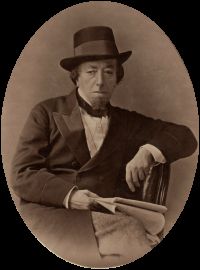
Benjamin Disraeli

Benjamin Disraeli

Summary

Portrait of Benjamin Disraeli Benjamin Disraeli,  Sybil — Book 6/Chapter 5

“ No violence, no bloodshed, but toil halts, and then our oppressors will learn the great economical truth as well as moral lesson, that when Toil plays Wealth ceases."
"When Toil ceases the People suffer," said Sybil. "That is the only truth that we have learnt, and it is a bitter one."
"Can we be free without suffering," said Gerard. "Is the greatest of human blessings to be obtained as a matter of course; to be plucked like fruit, or seized like a running stream? No, no: we must suffer, but we are wiser than of yore,—we will not conspire. Conspiracies are for aristocrats, not for nations."
”
Source: Wikisource

Portrait of Benjamin Disraeli Benjamin Disraeli,  Sybil — Book 6/Chapter 5

“ Nor had Hatton, except to Gerard, ever intimated his wishes, for we could scarcely call them hopes. He was a silent suitor of Sybil, watching opportunities and ready to avail himself of circumstances which he worshipped. His sanguine disposition, fed by a very suggestive and inventive mind, and stimulated by success and a prosperous life, sustained him always to the last. Hatton always believed that everything desirable must happen if a man had energy and watched circumstances. ”
Source: Wikisource

Portrait of Benjamin Disraeli Benjamin Disraeli,  Sybil — Book 6/Chapter 5

“ It was impossible that one so rarely gifted and educated with so much daintiness, could ever make a wife of the people. Hatton offered wealth, but Sybil had never seemed to comprehend his hopes, and Gerard felt that their ill-assorted ages was a great barrier. There was of all the men of his own order but one, who from his years, his great qualities, his sympathy, and the nature of his toil and means, seemed not unfitted to be the husband of his daughter; and often had Gerard mused over the possibility of these intimate ties with Morley. ”
Source: Wikisource

Get perspective with Kwize: daily news enlightened by great literature