Summary

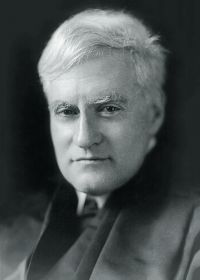
Portrait of Benjamin N. Cardozo Benjamin N. Cardozo Anderson v. Wilson — Opinion of the Court

In so ruling, we do not forget that the trust is an abstraction, and that the economic pinch is felt by men of flesh and blood. Even so, the law has seen fit to deal with this abstraction for income tax purposes as a separate existence, making its own return under the hand of the fiduciary and claiming and receiving its own appropriate deductions. The Revenue Act of 1921 under which the tax in question was imposed defines the word 'taxpayer' as including a trust or an estate.
Source: Wikisource

Portrait of Benjamin N. Cardozo Benjamin N. Cardozo Anderson v. Wilson — Opinion of the Court

There has been no loss by the taxpayer of anything that belonged to him before the hour of the sale, for nothing was ever his until the sale had been made and the fund thereby created. A shrinkage of values between the creation of the power of sale and its discretionary exercise is a loss to the trust, which may be allowable as a deduction upon a return by the trustees. It is not a loss to a legatee who has received his legacy in full.
Source: Wikisource

Portrait of Benjamin N. Cardozo Benjamin N. Cardozo Anderson v. Wilson — Opinion of the Court

One might as well say that a legatee of shares of stock to be bought by executors out of the moneys of the estate would have an allowance of a loss upon a showing that the value would have been greater if the executors in the exercise of their discretion had bought sooner than they did. The legatee must take the legacy as the testator has bequeathed it.
We hold that the trust, and not the taxpayer, has suffered the loss resulting from the sale of the Commercial Building, and it follows that, where loss has not been suffered, there is none to be allowed.
Source: Wikisource

Get perspective with Kwize: daily news enlightened by great literature