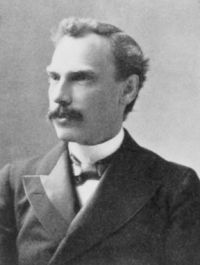
Benjamin Wisner Bacon

Benjamin Wisner Bacon

Summary

Portrait of Benjamin Wisner Bacon Benjamin Wisner Bacon 1911 Encyclopædia Britannica, Volume 15… (1911)

Whatever the currency in classical circles of the epistle as a literary form, it is irrational to put first in the development of Christian literature a general epistle, couched in fluent, even rhetorical, Greek, and afterwards the Pauline letters, which both as to origin and subsequent circulation were a product of urgent conditions.
Source: Wikisource

Portrait of Benjamin Wisner Bacon Benjamin Wisner Bacon 1911 Encyclopædia Britannica, Volume 15… (1911)

While the gospel is pre-eminently the divine gift of “wisdom,” “wisdom” is not personified, but conceived primarily as a system of humanitarian ethics, i. 21–25, and only secondarily as a spiritual effluence, imparting the regenerate disposition, the “mind that was in Christ Jesus,” iii. 13–18. And yet for James as well as for Paul Christ is “the wisdom of God.” The difference in conception of the term is similar to that between Ecclesiasticus and the Wisdom of Solomon. Our author, like Paul, expects the hearers of the word to be “a kind of first-fruits to God of his creation.”
Source: Wikisource

Portrait of Benjamin Wisner Bacon Benjamin Wisner Bacon 1911 Encyclopædia Britannica, Volume 15… (1911)

For this conception of the gospel and of the officially organized church, our nearest analogy is in Matthew, or rather in the blocks of precepts of the Lord which after subtraction of the Markan narrative framework are found to underlie our first gospel. It may be mere coincidence that the material in Matthew as well as in the Didache seems to be arranged in five divisions, beginning with a commendation of the right way, and ending with warnings of the judgment, while the logical analysis of James yields something similar; but of the affinity of spirit there can be no doubt.
Source: Wikisource

Get perspective with Kwize: daily news enlightened by great literature