Summary

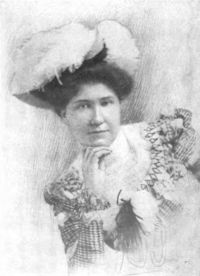
Portrait of Carolyn Wells Carolyn Wells More Lives Than One — XI. At the Studio (1923)

On the way home in the car—Hutchins having remained, behind—Barham said, “I can’t see, Nick, that the police are making any headway whatever. I can’t see but Locke has them just where he wants them—if he wants them anywhere.”
“Where does he want them?”
“Oh, I mean, he has things all his own way. Apparently, he means never to come back. There’s not a thing in the place of value—that’s what I noticed especially—there’s not a personal thing that he could possibly care for—oh, of course, there are his pictures—but I can’t imagine any one caring greatly for those.”
Source: Wikisource

Portrait of Carolyn Wells Carolyn Wells More Lives Than One — XI. At the Studio (1923)

Yet, when they met, Rosamond’s manner put him quite at his ease, and he was glad he had come.
“You dear man,” she said, holding out both hands. “I’m glad to see you—do sit down. I’ve wanted to tell you in person how sorry I feel for you, and how I wish I could do something to help.”
“No, Rosamond—there’s nothing any one can do to help. I’m grateful for sympathy, of course—but—the truth is, nothing helps. The awfulness of the whole thing is beyond all help.
Source: Wikisource

Portrait of Carolyn Wells Carolyn Wells More Lives Than One — XI. At the Studio (1923)

Barham said, in answer to Nelson’s unspoken question. “You see, it can do no good to get Locke, if he isn’t the murderer. I mean, it isn’t worth ten thousand dollars to get him just to talk to.”
“No,” Nelson agreed. But he didn’t quite understand. Surely, Barham had been most anxious to capture Locke.
“Now, go ahead with your hunt,” Barham said, “and, look here, Nick, I rather cotton to that plan of yours to go and search the Locke apartment—and I believe I’ll go with you.”
Source: Wikisource

Get perspective with Kwize: daily news enlightened by great literature