“ With a despairing look, as of one forced to meet an impending fate, she rose, crossed the room and rang a bell. Then she returned to her seat and said quietly, “You may ask the man such questions as you wish, Mr. Burroughs, but I beg you will not include me in the conversation.” “Not unless it should be necessary,” I replied coldly, for I did not at all like her making this stipulation. To me it savored of a sort of cowardice, or at least a presumption on my own chivalry. When the man appeared, I saw at a glance he was quite as much agitated as Miss Lloyd. ”
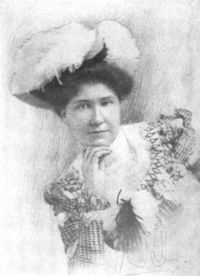
Carolyn Wells
Summary
Carolyn Wells’ The Gold Bag (1905) is a suspenseful mystery set in New York and West Sedgwick, focusing on the murder of Joseph Crawford and the subsequent inquiry into his will. Detective Mr. Burroughs moves through a network of suspicion involving Gregory Hall, Philip Crawford, and Florence Lloyd, whose intentions are entangled with inheritance, family discord, and a mysterious golden bag.
Themes of deceit, ethical dilemmas, and logical reasoning propel the story, leading to disclosures about treachery and fairness. Wells’ narrative combines traditional whodunit elements with psychological intensity, with the key role of the titular object providing a central focus.
Quotes from The Gold Bag (Carolyn Wells)
“ Then, as by chance, he moved a paper in the drawer, and I saw the pistol. In a moment of blind rage I grasped it and shot him. Death was instantaneous. Like one in a dream, I laid down the pistol, and came away. I was saved, but at what a cost! No one, I think, saw me come or go. I was afterward puzzled to know what became of the pistol, and of the will which lay on the desk when I was there. These matters have since been explained. Philip Crawford is as much a criminal as I. I shot a man, but he robbed the dead. He has confessed and made restitution, so he merits no punishment. ”
“ I began, “you may as well tell me the truth about your home coming last Tuesday night. In the first place, you must admit that you were wearing in your coat one of the yellow roses which had been sent to Miss Lloyd.” “No, no, indeed!” declared Louis, giving Elsa a threatening glance, as if forbidding her to contradict him. “Nonsense, man,” I said; “don't stand there and tell useless lies. It will not help you. The best thing you can do for yourself and for all concerned is to tell the truth. And, moreover, if you don't tell it to me now, you will have to tell it to Mr. Goodrich, later. ”
