Summary

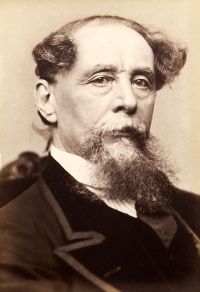
Portrait of Charles Dickens Charles Dickens A Child's History of England — Chapter 19 (1900)

By this earl he was conducted to the castle of Flint, where his cousin Henry met him, and dropped on his knee as if he were still respectful to his sovereign.
'Fair cousin of Lancaster,' said the King, 'you are very welcome' (very welcome, no doubt; but he would have been more so, in chains or without a head) .
'My lord,' replied Henry, 'I am come a little before my time; but, with your good pleasure, I will show you the reason. Your people complain with some bitterness, that you have ruled them rigorously for two-and-twenty years.
Source: Wikisource

Portrait of Charles Dickens Charles Dickens A Child's History of England — Chapter 19 (1900)

Richard, son of the Black Prince, a boy of eleven years of age, succeeded to the Crown under the title of King Richard the Second. The whole English nation were ready to admire him for the sake of his brave father. As to the lords and ladies about the Court, they declared him to be the most beautiful, the wisest, and the best—even of princes—whom the lords and ladies about the Court, generally declare to be the most beautiful, the wisest, and the best of mankind. To flatter a poor boy in this base manner was not a very likely way to develop whatever good was in him
Source: Wikisource

Portrait of Charles Dickens Charles Dickens A Child's History of England — Chapter 19 (1900)

As soon as the King found himself safe, he unsaid all he had said, and undid all he had done; some fifteen hundred of the rioters were tried (mostly in Essex) with great rigour, and executed with great cruelty. Many of them were hanged on gibbets, and left there as a terror to the country people; and, because their miserable friends took some of the bodies down to bury, the King ordered the rest to be chained up—which was the beginning of the barbarous custom of hanging in chains.
Source: Wikisource

Get perspective with Kwize: daily news enlightened by great literature