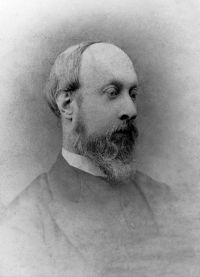
Charles Malcolm Kennedy

Charles Malcolm Kennedy

Summary

Portrait of Charles Malcolm Kennedy Charles Malcolm Kennedy 1911 Encyclopædia Britannica (1911)

The German government have, as we have seen, maintained a free zone of this nature at Hamburg. And when the free port at Copenhagen was opened, counter measures were adopted at Danzig and Stettin. An agitation has arisen in France to provide at certain ports free zones similar to those at Copenhagen and Hamburg, and to open free ports in French possessions. A bill to this effect was submitted to the chamber of deputies on the 12th of April 1905. Colonial free ports, such as Hong-Kong and Singapore, do not interfere with the uniformity of the home customs and excise policy.
Source: Wikisource

Portrait of Charles Malcolm Kennedy Charles Malcolm Kennedy 1911 Encyclopædia Britannica (1911)

The administrative policy of European countries has been gradually adopted in other parts of the world, and customs duties have become almost universal, conjoined with bonding and transhipment facilities. In British colonies and possessions, under an act of parliament passed in 1766, and repealed in 1867, two ports in Dominica and four in Jamaica were free, Malacca, Penang and Singapore have been free ports since 1824, Hong-Kong since 1842, and Weihaiwei since it was leased to Great Britain in 1898. Zanzibar was a free port during 1892–1899.
Source: Wikisource

Portrait of Charles Malcolm Kennedy Charles Malcolm Kennedy 1911 Encyclopædia Britannica (1911)

The National Assembly in 1790 maintained this policy, and created free ports in the French West Indies. In 1795, however, all such privileges were abolished, but large bonding facilities were allowed at Marseilles to favour the Levant trade. The government of Louis XVIII. in 1814 restored, and in 1871 again revoked, the free port privileges of Marseilles. There are now no free ports in France or in French possessions; the bonding system is in force.
Source: Wikisource

Get perspective with Kwize: daily news enlightened by great literature