Summary

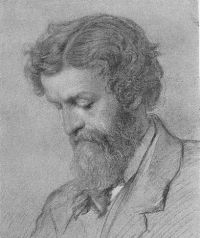
Portrait of Charles Thomas Newton Charles Thomas Newton On two Greek inscriptions, from Kamiros and Ialysos… (1878)

Three commissioners are to be at once elected, who are to superintend the carrying out the decree, and are to contract for providing a stelè, for which the lowest tender is to be accepted. The contractor is to inscribe the κτοῖναι on the stelè, to erect it in the Hieron of Athena, and to fix it firmly all round with lead. The Treasurer is to defray the cost of all these operations. The κτοινάται or members of the κτοῖναι are to select out of these κτοῖναι a μάστρος who is to be appointed in the most holy Hieron in the κτοῖνα, according to the law of the Rhodians.
Source: Wikisource

Portrait of Charles Thomas Newton Charles Thomas Newton On two Greek inscriptions, from Kamiros and Ialysos… (1878)

The assembly of κτοινάται is to meet in the temple of Athena when the ἱεροποιοί come, and are to inspect the ἱερά of the people of Kamiros. Whether we interpret ἱερά here in its more usual sense "the sacred precincts round temples," or as "sacred rites," the functionaries assembled were evidently invested with the duty of general supervision, for we can attach no other meaning to the word ἀθρεόντω.
In the Lindian inscription, already referred to, the ἱεροποιοί are associated with the ἱερεῖς and ἱεροθύται "sacrificers," standing third in the order of precedence.
Source: Wikisource

Portrait of Charles Thomas Newton Charles Thomas Newton On two Greek inscriptions, from Kamiros and Ialysos… (1878)

Schmidt in his recent edition of Hesychios marks this entry with an asterisk, because it is out of its alphabetical order, but, since the discovery of this inscription, there is no ground for stigmatizing this entry. The gloss is somewhat obscure. If the words had been χωρήσεις προγονικῶν ἱερῶν, we might have interpreted them "the setting apart of ancestral rites or of sacred precincts inherited from ancestors," but I cannot find that ἱερεία is ever used in that sense, though in the Septuagint it bears the sense of "festival," "sacrifice."
Source: Wikisource

Get perspective with Kwize: daily news enlightened by great literature