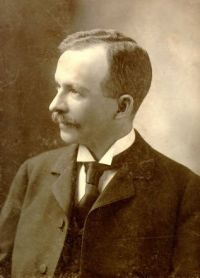
Charles W. Chesnutt

Charles W. Chesnutt

Summary

Portrait of Charles W. Chesnutt Charles W. Chesnutt Frederick Douglass (Chesnutt)… (1899)

The contention that a class who constitute half the population of a State shall be entirely unrepresented in its councils, because, forsooth, their will there expressed may affect the government of another class of the same general population, is as repugnant to justice and human rights as was the institution of slavery itself. Such a condition of affairs has not the melodramatic and soul-stirring incidents of chattel slavery, but its effects can be as far-reaching and as debasing.
Source: Wikisource

Portrait of Charles W. Chesnutt Charles W. Chesnutt Frederick Douglass (Chesnutt)… (1899)

The once despised abolitionists were now popular heroes. Douglass's checkered past seemed all the more romantic in the light of the brighter present, like a novel with a pleasant ending; and those who had hung thrillingly upon his words when he denounced slavery now listened with interest to what he had to say upon other topics. He spoke sometimes on Woman Suffrage, of which he was always a consistent advocate. His most popular lecture was one on "Self-made Men."
Source: Wikisource

Portrait of Charles W. Chesnutt Charles W. Chesnutt Frederick Douglass (Chesnutt)… (1899)

In September, 1866, Douglass was elected a delegate from Rochester to the National Loyalists' Convention at Philadelphia, called to consider the momentous questions of government growing out of the war. While he had often attended anti-slavery conventions as the representative of a small class of abolitionists, his election to represent a large city in a national convention was so novel a departure from established usage as to provoke surprise and comment all over the country.
Source: Wikisource

Get perspective with Kwize: daily news enlightened by great literature