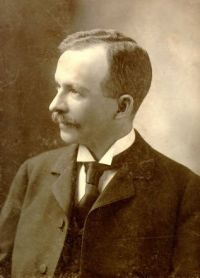
Charles W. Chesnutt

Charles W. Chesnutt

Summary

Portrait of Charles W. Chesnutt Charles W. Chesnutt The House Behind the Cedars — VIII (1900)

Never does one feel so strongly the universal brotherhood of man as when one loves some other fellow's sister. Warwick sprang from his chair and clasped Tryon's extended hand with real emotion. He knew of no man whom he would have preferred to Tryon as a husband for his sister.
"My dear George--my dear sister," he exclaimed, "I am very, very glad. I wish you every happiness. My sister is the most fortunate of women."
Source: Wikisource

Portrait of Charles W. Chesnutt Charles W. Chesnutt The House Behind the Cedars — VIII (1900)

After he had dined twice at Warwick's, subsequently to the tournament,--his lucky choice of Rena had put him at once upon a household footing with the family,--his views of marriage changed entirely. It now seemed to him the duty, as well as the high and holy privilege of a young man, to marry and manfully to pay his debt to society. When in Rena's presence, he could not imagine how he had ever contemplated the possibility of marriage with Blanche Leary,--she was utterly, entirely, and hopelessly unsuited to him.
Source: Wikisource

Portrait of Charles W. Chesnutt Charles W. Chesnutt The House Behind the Cedars — VIII (1900)

If Rena could forget the secret, and Tryon should never know it, it would be no obstacle to their happiness. But Rena felt, with a sinking of the heart, that happiness was not a matter of law or of fact, but lay entirely within the domain of sentiment. We are happy when we think ourselves happy, and with a strange perversity we often differ from others with regard to what should constitute our happiness.
Source: Wikisource

Get perspective with Kwize: daily news enlightened by great literature