Summary

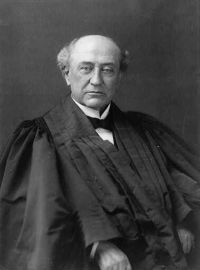
Portrait of David Josiah Brewer David Josiah Brewer Acers v. United States — Opinion of the Court

With respect to a deadly weapon, the court defined it as 'a weapon with which death may be easily and readily produced; anything, no matter what it is, whether it is made for the purpose of destroying animal life, or whether it was not made by man at all, or whether it was made by him for some other purpose, if it is a weapon, or if it is a thing with which death can be easily and readily produced, the law recognizes it as a deadly weapon.' We see nothing in this definition to which any reasonable exception can be taken.
Source: Wikisource

Portrait of David Josiah Brewer David Josiah Brewer Acers v. United States — Opinion of the Court

We have so little doubt that, when one uses a stone of such size, and strikes a blow on the skull so severe as to fracture it, a jury ought to find that the stone was a deadly weapon, that if the court had expressed a definite opinion to that effect we should have been reluctant, on that account alone, to have disturbed the judgment.
Source: Wikisource

Portrait of David Josiah Brewer David Josiah Brewer Acers v. United States — Opinion of the Court

With reference to the matter of self-defense by reason of the presence of a real danger, the court charged that it could not be a past danger, or a danger of a future injury, but a present danger, and a danger of 'great injury to the person injured, that would maim him, or that would be permanent in its character, or that might produce death.' In this we think nothing was stated incorrectly, and that there was a fair definition of what is necessary to constitute self-defense by reason of the existence of a real danger.
Source: Wikisource

Get perspective with Kwize: daily news enlightened by great literature