Summary

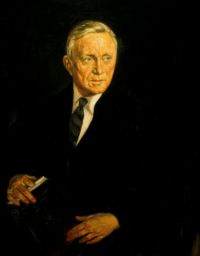
Portrait of William O. Douglas William O. Douglas Rugendorf v. United States — Dissent

His only defense would be proof that someone without his knowledge put them there. Who that person was, when he placed the furs in the basement, what his motivations were in placing the furs there, what his relations with the defendant were, what connections he had with the stolen articles-these questions go to the very heart of the defense. Roviaro would, therefore, require in the exercise of sound discretion disclosure of the informant. Unless we allow that amount of leeway, we can only rest uneasy in the thought that we are helping send an innocent man to prison.
Source: Wikisource

Portrait of William O. Douglas William O. Douglas Rugendorf v. United States — Dissent

The privilege recognizes the obligation of citizens to communicate their knowledge of the commission of crimes to lawenforcement officials and, by preserving their anonymity, encourages them to perform that obligation.'
But there are times when the privilege must give way. In Roviaro, we put one of those exceptions in these words: 'Where the disclosure of an informer's identity, or of the contents of his communication, is relevant and helpful to the defense of an accused, or is essential to a fair determination of a cause, the privilege must give way.
Source: Wikisource

Portrait of William O. Douglas William O. Douglas Rugendorf v. United States — Dissent

The Solicitor General seeks to avoid that conclusion by saying that even though the informant might disclose who stole the furs and how they reached the defendant's basement, 'this would not necessarily have cast light upon the issue of petitioner's knowledge.' The Solicitor General also argues that it is highly conjectural that identification of the person who admitted the informant to the basement would materially illuminate the question of petitioner's knowledge.
Source: Wikisource

Get perspective with Kwize: daily news enlightened by great literature