Summary

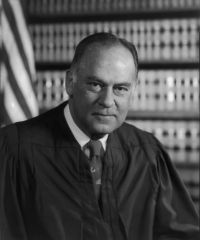
Portrait of Potter Stewart Potter Stewart McCray v. Illinois — Opinion of the Court

The result would be that the State could use the informant's information only as a lead and could search only if it could gather adequate evidence of probable cause apart from the informant's data. Perhaps that approach would sharpen investigatorial techniques, but we doubt that there would be enough talent and time to cope with crime upon that basis. Rather we accept the premise that the informer is a vital part of society's defensive arsenal. The basic rule protecting his identity rests upon that belief.
Source: Wikisource

Portrait of Potter Stewart Potter Stewart McCray v. Illinois — Opinion of the Court

What Roviaro thus makes clear is that this Court was unwilling to impose any absolute rule requiring disclosure of an informer's identity even in formulating evidentiary rules for federal criminal trials. Much less has the Court ever approached the formulation of a federal evidentiary rule of compulsory disclosure where the issue is the preliminary one of probable cause, and guilt or innocence is not at stake. Indeed, we have repeatedly made clear that federal officers need not disclose an informer's identity in applying for an arrest or search warrant.
Source: Wikisource

Portrait of Potter Stewart Potter Stewart McCray v. Illinois — Opinion of the Court

There the need for a truthful verdict outweighs society's need for the informer privilege. Here, however, the accused seeks to avoid the truth. The very purpose of a motion to suppress is to escape the inculpatory thrust of evidence in hand, not because its probative force is diluted in the least by the mode of seizure, but rather as a sanction to compel enforcement officers to respect the constitutional security of all of us under the Fourth Amendment.
Source: Wikisource

Get perspective with Kwize: daily news enlightened by great literature