Summary

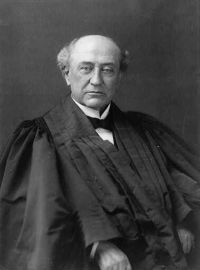
Portrait of David Josiah Brewer David Josiah Brewer Adams Exp. Company v. Ohio State Auditor…

To the owners thereof, for the purposes of income and sale, the corporate property is worth hundreds of thousands of dollars. Does substance of right require that it shall pay taxes only upon the thousands of dollars of tangible property which it possesses? Accumulated wealth will laugh at the crudity of taxing laws which reach only the one, and ignore the other; while they who own tangible property, nor organized into a single producing plant, will feel the injustice of a system which so misplaces the burden of taxation.
Source: Wikisource

Portrait of David Josiah Brewer David Josiah Brewer Adams Exp. Company v. Ohio State Auditor…

It is something of value, something on which he will receive cash, and which he can sell in the markets of the community for cash. It is as certainly property, and property of value, as if it were a building or a steamboat, and is an justly subject to taxation. It matters not in what this intangible property consists,-whether privileges, corporate franchises, contracts, or obligations. It is enough that it is property which, though intangible, exists, which has value, produces income, and passes current in the markets of the world.
Source: Wikisource

Portrait of David Josiah Brewer David Josiah Brewer Adams Exp. Company v. Ohio State Auditor…

To ignore this intangible property, or to hold that it is not subject to taxation at its accepted value, is to eliminate from the reach of the taxing power a large portion of the wealth of the country. Now, whenever separate articles of tangible property are joined together, not simply by a unity of ownership, but in a unity of use, there is not infrequently developed a property, intangible though it may be, which in value exceeds the aggregate of the value of the separate pieces of tangible property.
Source: Wikisource

Get perspective with Kwize: daily news enlightened by great literature