Summary

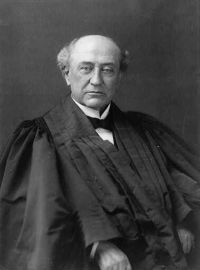
Portrait of David Josiah Brewer David Josiah Brewer Blake v. McClung (172 U.S. 239…

Is the corporation more powerful than the state? Is a voluntarily executed mortgage more valid than a statute? If, in fact, in pursuance of such a statute, a mortgage to each separate creditor was given and recorded as fast as the corporation came under obligation to him, could a nonresident creditor question the validity of the mortgage or the priority given thereby? And is the effect of the statute in controversy anything other than the imposition upon the assets of the corporation within the state of a single mortgage in favor of home creditors?
Source: Wikisource

Portrait of David Josiah Brewer David Josiah Brewer Blake v. McClung (172 U.S. 239…

If, voluntarily, the corporation placed a mortgage upon all its assets within the state to secure a debt to a single creditor residing within the state, and such mortgage was duly recorded, no one would have the hardihood to say that a resident or citizen of another state could challenge its validity or its priority over his unsecured debt, simply because he was a citizen of another state, or did not, in fact, know of its existence.
Source: Wikisource

Portrait of David Josiah Brewer David Josiah Brewer Blake v. McClung (172 U.S. 239…

Ten years ago a statute of Colorado guarantying priority to citizens of the state over all other creditors, even those by mortgage, was by all parties, by counsel, and by court conceded to be free from objection, while to-day a statute of Tennessee, in no way discriminating between citizens, but only between residents and in respect to foreign corporations, is declared to be so plainly at variance with the constitution of the United States that it must be adjudged void.
Source: Wikisource

Get perspective with Kwize: daily news enlightened by great literature