Summary

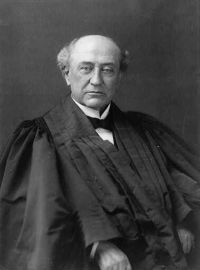
Portrait of David Josiah Brewer David Josiah Brewer Budd v. New York/Dissent Brewer…

The utmost possible liberty to the individual, and the fullest possible protection to him and his property, is both the limitation and duty of government. If it may regulate the price of one service which is not a public service, or the compensation for the use of one kind of property, which is not devoted to a public use, why may it not with equal reason regulate the price of all service, and the compensation to be paid for the use of all property?
Source: Wikisource

Portrait of David Josiah Brewer David Josiah Brewer Budd v. New York/Dissent Brewer…

I cannot bring myself to believe that when the owner of property has by his industry, skill, and money made a certain piece of his property of large value to many, he has thereby deprived himself of the full dominion over it which he had when it was of comparatively little value, nor can I believe that the control of the public over one's property or business is at all dependent upon the extent to which the public is benefited by it.
Source: Wikisource

Portrait of David Josiah Brewer David Josiah Brewer Budd v. New York/Dissent Brewer…

Surely the matters in which the public has the most interest are the supplies of food and clothing; yet can it be that by reason of this interest the state may fix the price at which the butcher must sell his meat, or the vendor of boots and shoes his goods? Men are endowed by their Creator with certain unalienable rights,-'life, liberty, and the pursuit of happiness;' and to 'secure,' not grant or create, these rights, governments are instituted.
Source: Wikisource

Get perspective with Kwize: daily news enlightened by great literature