Public use refers to the legal requirement under the Fifth Amendment of the U.S. Constitution that property taken through eminent domain must serve a public purpose and that owners receive fair compensation. This principle has generated controversy, especially following the Kelo v. City of New London (2005) decision, which broadened the definition to encompass economic development.
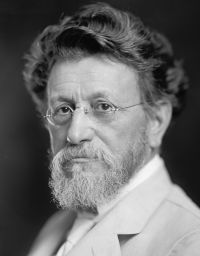
Scholars like Robert Ezra Park examined the role of public sentiment in social control, while H.G. Wells promoted the idea of public control over essential services. John Quincy Adams underscored the government's responsibility to promote the "public good," illustrating the conflict between personal freedoms and communal welfare. The doctrine's development reflects continuous dialogue between legal standards and societal demands.
 Robert Ezra Park,
The City: Suggestions for the investigation of human behavior in the city environment
(1915)
Robert Ezra Park,
The City: Suggestions for the investigation of human behavior in the city environment
(1915)