Summary

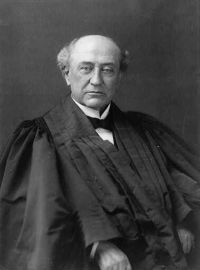
Portrait of David Josiah Brewer David Josiah Brewer Chicago Railway Company v. Wellman…

Must court and jury accept their opinions as a finality? Must it be declared, as matter of law, that a reduction of rates necessarily diminishes income? May it not be possible-indeed, does not all experience suggest the probabillty-that a reduction of rates will increase the amount of business, and therefore the earnings? At any rate, must the court assume that it has no such effect, and, ignoring all other considerations, hold, as matter of law, that a reduction of rates necessarily diminishes the earnings?
Source: Wikisource

Portrait of David Josiah Brewer David Josiah Brewer Chicago Railway Company v. Wellman…

If the vaildity of such a law in its application to a particular company depends upon a question of fact as to its effect upon the earnings, may not the court properly leave that question to the jury, and decline to assume that the effect is as claimed? There can be but one answer to these questions. If the contention be that the legislature has no power in the matter, and that an act fixing rates, however high they may be, is necessarily unconstitutional, it is emough to refer to the long series of cases in this court in which the contrary has been decided.
Source: Wikisource

Portrait of David Josiah Brewer David Josiah Brewer Chicago Railway Company v. Wellman…

Whenever, in pursuance of an honest and actual antagonistic assertion of rights by one individual against another, there is presented a question involving the validity of any act of any legislature, state or federal, and the decision necessarily rests on the competency of the legislature to so enact, the court must, in the exercise of its solemn duties, determine whether the act be constitutional or not
Source: Wikisource

Get perspective with Kwize: daily news enlightened by great literature