Summary

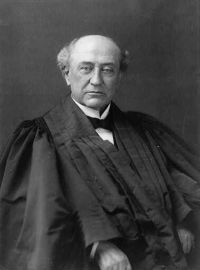
Portrait of David Josiah Brewer David Josiah Brewer Graves v. United States (150 U.S. 118…

Now, commenting upon the testimony, the counsel for the defense could argue to the jury that they had a double identification,-that of the defendant and that of his wife,-while the government had only one identification,-that of the defendant. Was it not a legitimate argument for the district attorney to make, in response to this, that if the wife had been in the court room, by the side of her husband, during the trial, as ordinarily she would be expected to be, the government might have had a double identification equally with the defendant?
Source: Wikisource

Portrait of David Josiah Brewer David Josiah Brewer Graves v. United States (150 U.S. 118…

If, for instance, the fruits or instruments of crime are introduced in evidence, is not the action and conduct of the defendant at the sight of them, as also his demeanor generally in the presence of the jury, a matter of consideration and legitimate comment? If it be developed that a witness exists, presumably under the control of the defendant, who can throw light upon a vital matter, and he is not produced, may not the jury fairly consider that fact, and may not counsel comment on it?
Source: Wikisource

Portrait of David Josiah Brewer David Josiah Brewer Graves v. United States (150 U.S. 118…

She was in the city, as the testimony showed, and her absence from the court room, unexplained, certainly suggested a motive, and that motive one which case suspicion upon the defendant. I think the rule that should be laid down is that, in the absence of express prohibition, every fact which, in no illegal manner, comes to the knowledge of the jury during the progress of a trial, and which may influence their minds, is a subject of comment by counsel in their argument. The fact that defendant's wife was in the city was developed by the testimony
Source: Wikisource

Get perspective with Kwize: daily news enlightened by great literature