Summary

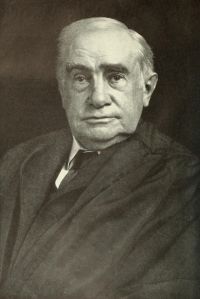
Portrait of Henry Billings Brown Henry Billings Brown Ex parte Jones — Opinion of the Court

There was also error in refusing to permit the defendant to prove by certain witnesses that the deceased, Anna Maledon, made statements to them in apparent contradiction to her dying declaration, and tending to show that defendant did not shoot her intentionally. Whether these statements were admissible as dying declarations or not is immaterial, since we think they were admissible as tending to impeach the declaration of the deceased, which had already been admitted. A dying declaration by no means imports absolute verity.
Source: Wikisource

Portrait of Henry Billings Brown Henry Billings Brown Ex parte Jones — Opinion of the Court

Dying declarations are an exception to the general rule that only sworn testimony can be received, the fear of impending death being assumed to be as powerful an incentive to truth as the obligation of an oath. The fact that the deceased had received extreme unciton had some tendency to show that she must have known that she was in articulo mortis, and, if the jury were of opinion that the fact that she received it lent an additional sanctity to her statement, it was no error to admit evidence of it. If not, it could do the defendant no harm.
Source: Wikisource

Portrait of Henry Billings Brown Henry Billings Brown Ex parte Jones — Opinion of the Court

The history of criminal trials is replete with instances where witnesses, even in the agonies of death, have, through malice, misapprehension, or weakness of mind, made declarations that were inconsistent with the actual facts; and it would be a great hardship to the defendant, who is deprived of the benefit of a cross-examination, to hold that he could not explain them.
Source: Wikisource

Get perspective with Kwize: daily news enlightened by great literature