Summary

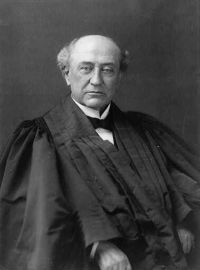
Portrait of David Josiah Brewer David Josiah Brewer James v. Bowman — Opinion of the Court

We are fully sensible of the great wrong which results from bribery at elections, and do not question the power of Congress to punish such offenses when committed in respect to the election of Federal officials. At the same time it is all-important that a criminal statute should define clearly the offense which it purports to punish, and that when so defined it should be within the limits of the power of the legislative body enacting it. Congress has no power to punish bribery at all elections.
Source: Wikisource

Portrait of David Josiah Brewer David Josiah Brewer James v. Bowman — Opinion of the Court

That would be to establish a code of municipal law regulative of all private rights between man and man in society. It would be to make Congress take the place of the state legislatures, and to supersede them. It is absurd to affirm that, because the rights of life, liberty, and property (which include all civil rights that men have) are by the amendment sought to be protected against invasion on the part of the state without due process of law, Congress may therefore provide due process of law for their vindication in every case
Source: Wikisource

Portrait of David Josiah Brewer David Josiah Brewer James v. Bowman — Opinion of the Court

While it may be true that when one part of a statute is valid and constitutional, and another part is unconstitutional and void, the court may enforce the valid part where they are distinctly separable, so that each can stand alone, it is not within the judicial province to give to the words used by Congress a narrower meaning than they are manifestly intended to bear in order that crimes may be punished which are not described in language that brings them within the constitutional power of that body.
Source: Wikisource

Get perspective with Kwize: daily news enlightened by great literature