Summary

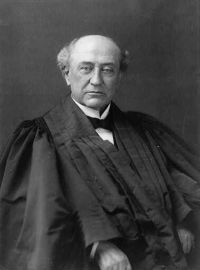
Portrait of David Josiah Brewer David Josiah Brewer Snell v. Chicago — Opinion of the Court

The state never contracted with the plank-road company that it should have the power to transfer its franchises, nor with these plaintiffs that their intestate and ancestor should acquire an absolute title to these franchises, with an indefeasible estate of inheritance. The mere grant of franchises to a corporation carries with it no power of alienation
Source: Wikisource

Portrait of David Josiah Brewer David Josiah Brewer Snell v. Chicago — Opinion of the Court

It is that the franchises vested in the plank-road corporation, though passing to Snell by the deed, passed to him, and not to him and his heirs, and that he took by such deed only a life estate. But in this is presented no question of a federal nature, but only of the extent of an authority to dispose of its franchises given by a statute to a corporation. It is assumed that the charter was a valid and binding contract, and that by it certain franchises were vested in the Northwestern Plank-Road Company as its absolute property, beyond the power of the state to arbitrarily retake.
Source: Wikisource

Portrait of David Josiah Brewer David Josiah Brewer Snell v. Chicago — Opinion of the Court

It is the settled law of this court that to give it jurisdiction of a writ of error to a state court it must appear affirmatively, not only that a rederal question was presented to that court for decision, but also that the decision of the question was necessary to the determination of the cause, and that it was actually decided adversely to the party claiming a right under the federal laws or constitution, or that the judgment, as rendered, could not have been given without such decision.
Source: Wikisource

Get perspective with Kwize: daily news enlightened by great literature