Summary

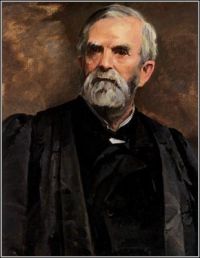
Portrait of William Burnham Woods William Burnham Woods New Orleans Company v. Delamore…

There is, therefore, nothing in the nature of a corporate franchise under the law of Louisiana which forbids its transfer with the other property of the corporation. And such must be the conclusion whenever a railroad company is authorized by law to mortgage its tangible property and franchises. When there has been a judicial sale of railroad property under a mortgage authorized by law, covering its franchises, it is now well settled that the franchises necessary to the use and enjoyment of the railroad passed to the purchasers.
Source: Wikisource

Portrait of William Burnham Woods William Burnham Woods New Orleans Company v. Delamore…

Justice FIELD, who delivered the opinion of the court, distinguished such an immunity from taxation from those rights, privileges, and immunities which, accurately speaking, are the franchises of a railroad company. He said: 'The franchises of a railroad corporation are rights or privileges which are essential to the operations of the corporation, and without which its works and road would be of little value.
Source: Wikisource

Portrait of William Burnham Woods William Burnham Woods New Orleans Company v. Delamore…

But the franchise to build, own, and manage a railroad and to take tolls thereon are not necessarily corporate rights. They are capable of existing in and being enjoyed by natural persons, and there is nothing in their nature inconsistent with their being assignable.' The same subject was considered by this court in the case of Morgan v. Louisiana, 93 U.S. 217, where it was held that exemption from taxation was a right personal to the railroad corporation to which it was granted, and did not pass upon a sale of its property and franchises.
Source: Wikisource

Get perspective with Kwize: daily news enlightened by great literature