Summary

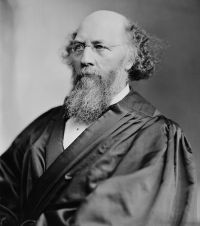
Portrait of Stephen Johnson Field Stephen Johnson Field Humphreys v. McKissock — Opinion of the Court

It is difficult to understand the course of reasoning by which a certificate of stock in an independent corporation can be an appurtenance to a railroad. If stock in the company in question could be considered an appurtenance to a railroad, by the same rule stock in a bank,or in any other corporation, with which the railroad did business, might be so considered. But were we to consider the Wabash Company as possessing a separable legal interest in the elevator, it would not be appurtenant to its railroad.
Source: Wikisource

Portrait of Stephen Johnson Field Stephen Johnson Field Humphreys v. McKissock — Opinion of the Court

But nothing is more distinct than the two rights; the ownership of one confers no ownership of the other. The property of a corporation is not subject to the control of individual members, whether acting separately or jointly. They can neither incumber nor transfer that property, nor authorize others to do so. The corporation-the artificial being created holds the property, and alone can mortgage or transfer it; and the corporation acts only through its officers, subject to the conditions prescribed by law.
Source: Wikisource

Portrait of Stephen Johnson Field Stephen Johnson Field Humphreys v. McKissock — Opinion of the Court

It results from this definition that land can never the appurtenant to other land, or pass with it as belonging to it. All that can be reasonably claimed is that the word 'appurtenance' will carry with it easements and servitudes used and enjoyed with the lands for whose benefit they were created. Even an easement will not pass unless it is necessary to the enjoyment of the thing granted.' Under the term 'appurtenances,' as used in the mortgage in question, only such property passes as is indispensable to the use and enjoyment of the franchises of the company.
Source: Wikisource

Get perspective with Kwize: daily news enlightened by great literature