Summary

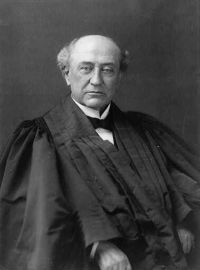
Portrait of David Josiah Brewer David Josiah Brewer United States v. Lynah/Dissent Douglass White…

The quantum of damages would thus not be the value of the property, but the mere cost of increasing the height of the embankment so as to prevent the water from flowing over it. The fact, then, that a taking is now held to exist, and therefore the United States is compelled to pay the value of the entire property, submits the United States, in the exercise of a power conferred upon it by the Constitution, to a rule which no individual would be subjected to in a controversy between private parties.
Source: Wikisource

Portrait of David Josiah Brewer David Josiah Brewer United States v. Lynah/Dissent Douglass White…

When a plantation or a portion thereof is situated on the bank of a navigable river, below high-water mark, and because of such situation is dependent for its profitable operation upon drainage into the river at mean low tide, does the United States appropriate the property by the simple fact that in improving the navigation of the river it raises the mean low tide slightly above the height where it was wont theretofore to be, and by reason of which the drainage of the land below high-water mark is destroyed?
Source: Wikisource

Portrait of David Josiah Brewer David Josiah Brewer United States v. Lynah/Dissent Douglass White…

There may be a wide legal difference arising from damage consequent on an interference with the drainage of property situated, as this is, by work done by the government in the improvement of navigation, and damage caused by the actual flooding of such property resulting from such work. To determine whether the findings show an actual flowing, or a mere injury to drainage, findings VIII., IX., and X. need to be considered. Let us see whether they give support to the claim of actual flooding by an overflow of the embankment at the plantation.
Source: Wikisource

Get perspective with Kwize: daily news enlightened by great literature