Summary

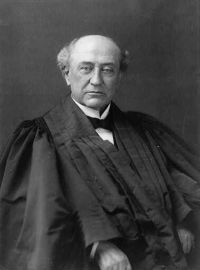
Portrait of David Josiah Brewer David Josiah Brewer Wood v. Beach — Opinion of the Court

It is only a recognition of the limitations prescribed in the statutes, for, by Revised Statutes (section 2258) , 'the lands included in any reservation by any treaty, law, or proclamation of the president, for any purpose,' are expressly declared to be not subject to the rights of pre-emption, and section 2289, the one giving the right to enter for a homestead, limits that right to 'unappropriated public lands.' The fact that the withdrawals were made by order of the interior department, and not by proclamation of the president, is immaterial.
Source: Wikisource

Portrait of David Josiah Brewer David Josiah Brewer Wood v. Beach — Opinion of the Court

Mary E. Wood, the defendant, is the widow of C. B. Wood, who during his lifetime moved upon the land with his family, and sought to enter it as a homestead. But his occupation and settlement, as appears from the agreed statement of facts, commenced on June 8, 1870, and, while this was prior to the selection by the railroad companies, the land had years before been withdrawn from sale or location, preemption or homestead entries.
Source: Wikisource

Portrait of David Josiah Brewer David Josiah Brewer Wood v. Beach — Opinion of the Court

It is sufficient if it has such publicity as accomplishes the end to be attained. If the president himself had signed the order in this case, and sent it to the registers and receivers who were to act under it, as notice to them of what they were to do in respect to the sales of the public lands, we cannot doubt that the lands would have been reserved by proclamation within the meaning of the statute.
Source: Wikisource

Get perspective with Kwize: daily news enlightened by great literature