Summary

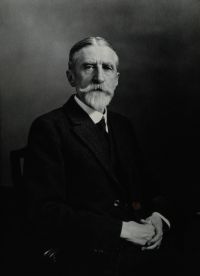
Portrait of Diarmid Noel Paton Diarmid Noel Paton 1911 Encyclopædia Britannica, Volume 18… (1911)

Carl von Noorden, however, who has studied the metabolism in cases of obesity, finds no marked departure from the normal. It may be that in some persons there is a very perfect absorption of food, but so far no scientific evidence for this view is forthcoming. In all cases the fat stored is available as a source of energy, and this circumstance is taken advantage of in the various fat “cures,” which consist in giving a diet containing enough proteids to cover the requirements of the body, with a supply of fats and carbohydrates insufficient to meet the energy requirements of the individual.
Source: Wikisource

Portrait of Diarmid Noel Paton Diarmid Noel Paton 1911 Encyclopædia Britannica, Volume 18… (1911)

Diabetes, as distinguished from transitory glycosuria, is produced by a diminution in the power of the tissues to use sugar, which thus accumulates in the blood and escapes in the urine. One great source of energy being unavailable, the tissues have to use more fats and more proteids to procure the necessary energy, and hence, unless these are supplied in very large quantities, there is a tendency to emaciation.
Source: Wikisource

Portrait of Diarmid Noel Paton Diarmid Noel Paton 1911 Encyclopædia Britannica, Volume 18… (1911)

The power of storing and using sugar in the tissues is strictly limited, and varies considerably in healthy individuals. Normally, when about 200 grms. of glucose are taken at one time, some of it appears in the urine within one hour. In some individuals the taking of even 100 grms. leads to a transient glycosuria, while others can take 250 grms. or more and use it all. But even in the same healthy individual the power of using sugar varies at different times and in different conditions, muscular exercise markedly increasing the combustion.
Source: Wikisource

Get perspective with Kwize: daily news enlightened by great literature